

Table of Contents
- Why Handmade Soap Dissolves Faster Than Commercial Bars
- Step 1: Cure Your Handmade Soap Properly Before Use
- Step 2: Choose the Best Soap Dish for Handmade Soap
- Step 3: Master How to Store Handmade Soap Long Term
- Step 4: Reduce Water Exposure in the Shower
- Step 5: Use Soap Saver Bags and Other Practical Hacks
- Understanding Handmade Soap Shelf Life and When to Replace Bars
- Travel Storage Solutions for Handmade Soap
- Frequently Asked Questions
Last Updated: September 21, 2026
Why Handmade Soap Dissolves Faster Than Commercial Bars
Handmade soap dissolves faster than commercial bars because its natural glycerin attracts water and it skips the hardening agents in mass-produced soap. Learning how to keep handmade soap lasting longer starts with one fact: your bar is not defective, just made differently.
Commercial bars often have the glycerin removed and synthetic hardeners added. Artisanal bars keep the glycerin because it is good for your skin. That same glycerin pulls moisture from the air and from your shower.
Customers often worry that small-batch bars will melt away in a week. The truth is simpler than expected.
Glycerin Content and Moisture Attraction
Glycerin is a natural humectant produced during saponification, the reaction that turns oils and lye into soap. It draws moisture toward itself, great for dry skin, less great for a bar sitting in a puddle.
Cold process and melt and pour soap both retain glycerin unless the maker removes it. Softer recipes high in olive oil absorb water faster; bars with more stearic acid hold their shape longer.
So the fix is not a different bar. It is better habits around the bar you already own.
Step 1: Cure Your Handmade Soap Properly Before Use
Curing is the single most effective way to extend the life of handmade soap. A properly cured bar is harder, milder, and slower to dissolve.
Most makers cure cold process soap four to six weeks; some recipes need eight or more. During curing, water evaporates and the soap becomes denser.
How Curing Time Affects Longevity
A six-week-cured bar outlasts a two-week-old bar by a wide margin. Less water in the bar means less water for your shower to replace.
If you buy from a small studio, ask how long the bars cured. At Azady Soap, we cure every batch before it ships.
Here is a quick reference for cure times:
Soap Type |
Minimum Cure |
Ideal Cure |
|---|---|---|
Melt and pour |
None |
1-2 weeks |
Cold process, soft recipe |
4 weeks |
6-8 weeks |
Cold process, hard recipe |
4 weeks |
6 weeks |
Castile (high olive oil) |
6 months |
12 months |
Store uncured bars on a curing rack with airflow on all sides. Do not wrap them yet. They need to breathe.
Step 2: Choose the Best Soap Dish for Handmade Soap
The best soap dish for handmade soap has drainage holes, raised ridges, and enough airflow to let the bar dry between uses. A dish that traps water dissolves your bar faster than anything else.
This is where most people lose the battle: a beautiful bar in a flat-bottomed ceramic dish pools water underneath and turns to mush within days.
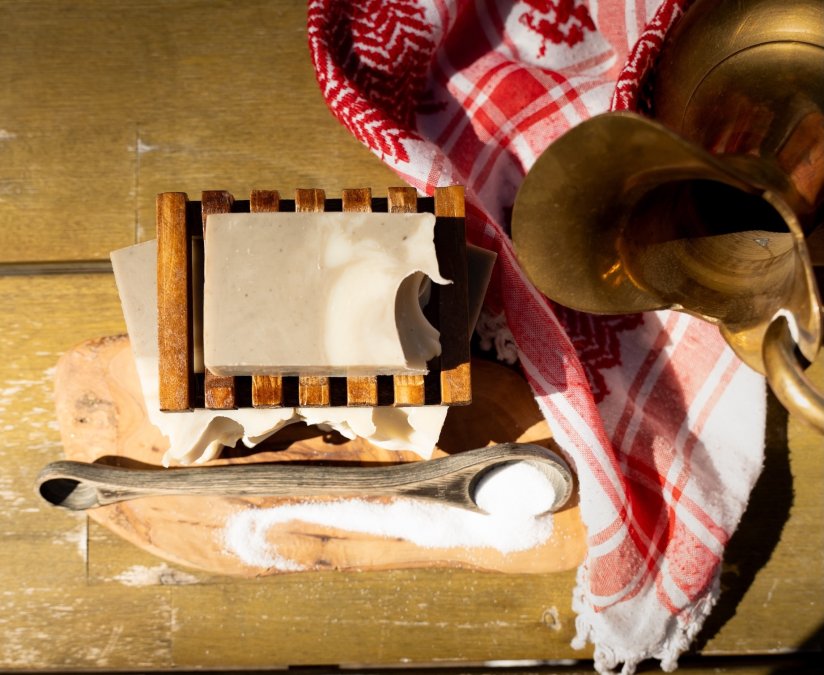
A wooden soap dish with drainage grooves holding the Dead Sea Mud bar of soap
Why Drainage Actually Works (The Mechanism Most Guides Skip)
Soap dissolves through micelle formation: water molecules surround the soap's fatty acid chains and pull them off the surface one layer at a time. A bar sitting in a puddle dissolves from the bottom up all day, whether you use it or not.
A dish with drainage interrupts that process: water runs off, the bar dries, and micelle formation stops until the next use.
Drainage, Airflow, and Materials That Matter
Look for dishes with slots or holes that let water run off, and raised ridges that keep the bar off the wet surface. The gap between bar and dish floor should be at least a quarter inch, or surface tension traps water.
Material matters too:
- Wood absorbs some moisture and dries well; untreated cedar and teak resist rot best
- Bamboo works similarly and resists mold, but cheap laminated bamboo can delaminate in a wet shower
- Silicone with drainage nubs is easy to clean and dishwasher-safe
- Stainless steel drains fast but can feel cold and shows water spots
- Glazed ceramic is fine only if it has real drainage holes, not just painted grooves
Matching the Dish to Your Bar's Chemistry
Not every bar needs the same dish. A dense Castile bar tolerates a less ventilated dish, while a bar high in soft oils, sunflower, safflower, canola, or high superfat absorbs water faster and needs maximum airflow.
Step 3: Master How to Store Handmade Soap Long Term
To store handmade soap long term, keep bars cool, dark, and dry with airflow around each bar. Heat, humidity, and light shorten shelf life.
Storage Containers, Cello Bags, and Rotation
Choose your container based on how long you plan to store:
- Under 3 months: paper wrap or open shelf
- 3-12 months: breathable cotton bag or cardboard box with holes
- Over 12 months: cool closet, single layer, no plastic
Step 4: Reduce Water Exposure in the Shower
Water exposure is the main enemy of bar soap: every extra second under the stream costs days of use.
A few small changes make a real difference:
- Step out of the water stream while lathering
- Use your hands or a washcloth, not the bar directly on your body
- Give the bar a quick shake before setting it down
- Never leave the bar sitting in a shower caddy puddle
Step 5: Use Soap Saver Bags and Other Practical Hacks
A soap saver bag is a small mesh or cloth pouch that holds your bar, lets it dry, and turns scraps into usable lather, one of the cheapest upgrades you can make.
Other practical hacks that work:
- Cut large bars in half and use one piece at a time
- Press soap scraps into a new bar once you have enough
- Keep a dedicated drying spot outside the shower
- Use a small fan in humid bathrooms
Understanding Handmade Soap Shelf Life and When to Replace Bars
Handmade soap shelf life ranges from about one to three years when stored well; after that, oils can go rancid and scent fades. But shelf life is not one number, it depends on the bar and how you use it.
What Actually Causes a Bar to Go Bad
Two separate clocks are running on every bar.
The first is water loss. A freshly cut bar can be 25 to 30 percent water by weight; as it cures, that number drops, the bar hardens, and it dissolves more slowly. A well-cured bar is denser, not just older.
Ingredient Selection: The Longevity Lever Most Buyers Ignore
If lasting longer is your priority, look at the fatty acid profile, not the marketing copy:
- High stearic acid (cocoa butter, shea butter, tallow), hard bar, slow dissolve, long shelf life
- High palmitic acid (palm oil, lard), hard bar, stable lather
- High oleic acid (olive oil, avocado oil), mild, conditioning, moderate hardness
- High linoleic acid (sunflower, grapeseed, hemp), soft bar, fast to oxidize, shortest shelf life
How Water Hardness Changes Everything
Water hardness is the variable almost no guide mentions, and it can shorten a bar's life more than any storage mistake.
Signs It Is Time to Replace a Bar
- A sour or crayon-like smell
- Orange or brown spots on the surface (DOS)
- A sticky, sweaty texture that will not dry
- Cracks deep enough to break the bar
Scent fading alone is not a safety issue. Rancidity is. If a bar smells off, retire it.
Travel Storage Solutions for Handmade Soap
Travel is where most bars meet an early end. Hotel bathrooms are humid, and luggage traps moisture for hours.
Frequently Asked Questions
How long does handmade soap typically last?
Handmade soap shelf life varies by formulation, but most cold process bars last 12 to 24 months when stored properly. Factors like curing period, glycerin content, and natural oils affect how long handmade soap lasting quality holds. Bars with higher stearic acid and lower glycerin tend to stay firm longer. After the recommended period, the soap may still be safe to use but can lose scent and lather quality.
Does a soap dish really make a difference in soap longevity?
Yes. A soap dish with proper drainage and airflow prevents water from pooling around the bar, which is the main cause of mushy soap. The best soap dish for handmade soap has raised ridges or slots that let water drip away and allow air to circulate around the entire bar. Without drainage, even a well-cured bar can dissolve in days instead of weeks.
How can I tell if my handmade soap has gone bad?
Signs include a rancid smell (like old cooking oil), a sticky or excessively soft texture, or orange spots on the surface. These indicate that natural oils have oxidized. If the bar smells off or feels slimy even when dry, it is past its handmade soap shelf life. You can still use it for cleaning, but it may irritate sensitive skin.
What is the best way to store handmade soap between uses?
Keep it on a draining soap dish away from direct water spray. Allow the bar to dry completely between uses. If you rotate two or more bars, each gets time to dry out. For long-term storage of unused bars, wrap them in breathable materials like cello bags or paper and keep them in a cool, dark place with low humidity. Avoid airtight plastic containers, which trap moisture.
