

Table of Contents
- What Is Cold Process Soap Making?
- The Chemistry Behind Saponification
- Cold Process Soap Benefits for Your Skin
- Soap Making Safety Precautions You Must Follow
- Essential Ingredients and Equipment
- Step-by-Step Cold Process Soap Making Process
- Cold Process Soap Curing Time and Gel Phase
- Troubleshooting Common Cold Process Soap Defects
- Frequently Asked Questions
Last Updated: September 20, 2026
What Is Cold Process Soap Making?
Cold process soap making combines oils and lye solution at room temperature, relying on the exothermic reaction between sodium hydroxide and fatty acids to generate the heat needed for saponification.
At Azady Soap, we practice cold process soap making because it preserves the beneficial properties of oils and butters, creating bars that feel more like skincare than basic cleansing.
Cold process is simple: measure oils, prepare lye solution, combine them, and let chemistry work. The soap cures for four to six weeks, producing a long-lasting, creamy bar with superior lather and skin-conditioning properties.
The Chemistry Behind Saponification
Saponification is the chemical reaction where sodium hydroxide breaks down fatty acids in oils, creating soap molecules and glycerin as a byproduct. This transformation happens because lye is a strong base that reacts with the triglycerides in oils, splitting them into fatty acid chains that become soap.
When you blend lye solution with oils, a vigorous exothermic reaction begins immediately, warming the mixture from room temperature to around 120-180 degrees Fahrenheit without external heat. This internal warmth accelerates saponification.
Over the first 24 to 48 hours, the soap may enter a gel phase, where the center becomes translucent and darker, indicating efficient saponification. The soap then cures as remaining water evaporates and unreacted lye neutralizes.
Glycerin, a natural byproduct of saponification, remains in cold process soap, unlike commercial soaps where it's extracted for profit. This glycerin attracts moisture to the skin, making the soap more hydrating.
Cold Process Soap Benefits for Your Skin
Cold process soap retains glycerin and nourishing oils without heat damage, delivering genuine skincare benefits for sensitive skin.
People with eczema, acne, or reactive skin often find cold process soap causes fewer flare-ups because it lacks synthetic detergents, artificial fragrances, and preservatives. Formulated with shea butter, coconut oil, and olive oil, it soothes rather than strips.
Cold process soap produces a creamy, stable lather from the balanced ratio of hard oils (coconut, palm) and soft oils (olive, castor) that you control. You're washing with a product that cleanses while respecting your skin's natural moisture.
A well-made cold process bar lasts longer than commercial soap because it's denser and contains less water, often outlasting two or three conventional bars.
Soap Making Safety Precautions You Must Follow
Sodium hydroxide, the lye required for cold process soap making, is caustic and causes chemical burns and severe eye damage (Sodium Hydroxide | ToxFAQs™). Carelessness causes accidents.
Always wear sealing safety goggles, chemical-resistant gloves rated for lye, long sleeves, and an apron. If lye contacts your skin, flush immediately with water for at least 15 minutes, then seek medical attention.
Prepare lye solution in a well-ventilated area outdoors or near an open window. Always add lye to water, never water to lye, to prevent violent boiling and spattering.
Work in a dedicated space away from children and pets. Lye solution looks like water but is deadly if ingested. Label all containers clearly. Keep vinegar nearby, it neutralizes lye spatters on skin, though water is still the primary flush.
Avoid mixing lye with aluminum or certain metals. Stainless steel and glass are safe. Never use equipment intended for food preparation. Designate soap-making tools exclusively for that purpose.
Essential Ingredients and Equipment
The basic ingredients for cold process soap are oils, lye solution, and water. You'll also add fragrance oils or essential oils for scent, and optional botanicals or colorants. The oils you choose determine the soap's hardness, lather quality, and skin feel.
Hard oils like coconut oil and palm oil create bars that resist softening in wet environments and produce abundant lather. Soft oils like olive oil and castor oil contribute conditioning properties and creamy lather. Most successful formulations balance these categories. Superfatting, adding extra oil beyond what the lye can convert, leaves some oil unconverted, making the soap more moisturizing.
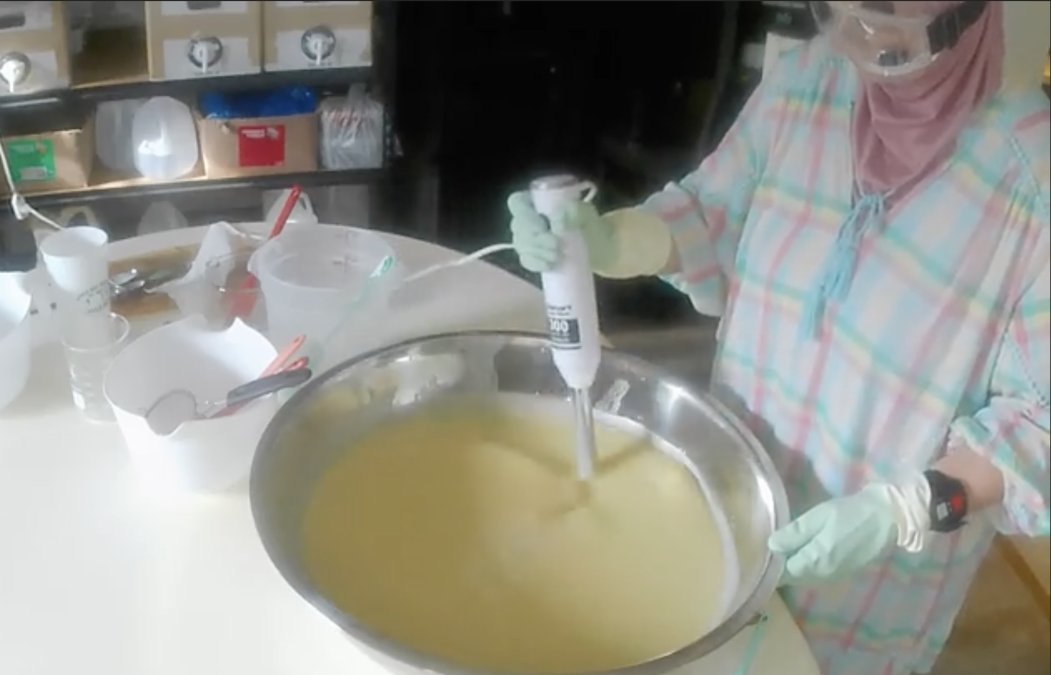
Essential equipment includes a stainless steel pot for mixing lye solution, a separate stainless steel pot for heating oils, an immersion blender for blending the two together to trace, and a thermometer to monitor temperatures. A scale accurate to 0.1 ounces ensures precise measurements. Soap molds can be purchased or improvised from silicone, wood, or plastic containers.
Step-by-Step Cold Process Soap Making Process
Step 1: Prepare Your Workspace and Safety Gear
Set up in a clean, uncluttered area with good ventilation. Lay out all equipment and ingredients before beginning. Put on your safety goggles, gloves, long sleeves, and apron. Have vinegar and water within arm's reach. Keep children and pets away from the workspace.
Hands wearing safety gear pouring traced soap batter into a wooden mold for cold process soap making
Step 2: Measure and Mix Your Lye Solution
Using your soap calculator, determine the exact amount of sodium hydroxide needed for your oil blend. Measure the lye carefully on your scale. Pour your measured water into a stainless steel pot, never glass, as the heat can crack it.
Step 3: Heat and Combine Your Oils
While the lye solution cools, heat your measured oils in a separate pot to around 100-110 degrees Fahrenheit. If using solid oils like coconut or palm, gentle heat will melt them into the liquid oils. Stir occasionally to ensure even temperature throughout. The goal is to match the lye solution temperature as closely as possible before blending.
Step 4: Blend Lye Solution with Oils to Trace
Carefully pour the cooled lye solution into the oils while stirring gently with a stick or spoon. Stir by hand for a few minutes to begin emulsification. Once the mixture begins to thicken slightly, switch to your immersion blender.
Step 5: Pour and Insulate Your Soap
Pour the traced soap into your mold, filling it completely. Tap the mold gently on the counter to release air bubbles. Smooth the top if desired.
Cold Process Soap Curing Time and Gel Phase
Cold process soap requires a minimum of four weeks to cure before use, though many soap makers recommend six weeks for optimal hardness and mildness. During this curing period, any excess water evaporates and the soap hardens fully.
Troubleshooting Common Cold Process Soap Defects
Separation or oily layers occur when lye and oils don't emulsify properly. This typically happens if temperatures were too different when you blended them or if you didn't blend long enough. Prevent this by matching temperatures closely and ensuring trace is complete before pouring.
Frequently Asked Questions
What is the difference between cold process and hot process soap making?
Cold process soap making relies on the natural heat generated by the chemical reaction between lye and oils (saponification), while hot process involves applying external heat to speed up saponification. Cold process preserves more of the natural glycerin and botanical properties, resulting in bars that are gentler on sensitive skin. Hot process soap cures faster but can lose some beneficial compounds. Cold process bars require 4-6 weeks to cure fully, while hot process soap is ready to use within days.
How long does cold process soap need to cure?
Cold process soap typically needs 4-6 weeks of curing time before it's ready to use. During the first 24-48 hours, the soap enters the gel phase, where the bars may become warm and translucent as saponification completes. After unmolding (usually at 24-48 hours), the bars continue to harden and excess water evaporates. A full cure allows the pH to balance and the bars to become harder and longer-lasting, making them ideal for daily use on sensitive skin.
What soap making safety precautions do I need to take?
Safety is critical when working with lye (sodium hydroxide), a caustic chemical. Always wear protective goggles, chemical-resistant gloves, and long sleeves. Work in a well-ventilated area away from children and pets. Use distilled water and stainless steel or glass containers—never aluminum. Measure lye carefully using a scale, never by volume. If lye contacts your skin, rinse immediately with vinegar followed by water. Keep a first aid kit nearby and never leave your workspace unattended during the process.
What are the essential ingredients for cold process soap making?
You need three core components: sodium hydroxide (lye), distilled water, and base oils. Base oils typically include hard oils like coconut and palm, soft oils like olive and avocado, and butters like shea or cocoa. The ratio of these oils determines your soap's hardness, lather, and skin feel. You'll also need a soap calculator to determine exact lye amounts based on your chosen oils. Optional additions include fragrance oils, essential oils, botanicals, and superfatting oils to increase skin-nourishing properties.
Can I make cold process soap at home as a beginner?
Yes, beginners can make cold process soap at home with proper preparation and safety measures. Start with a simple recipe using basic oils like coconut, olive, and palm. Use a soap calculator to ensure correct lye ratios—this prevents lye-heavy or oily bars. Follow safety precautions strictly, including protective gear and proper ventilation. Many beginners find success on their first batch, though expect a learning curve with troubleshooting visual defects like discoloration or texture issues. Taking time to understand saponification and measuring accurately sets you up for success.
Why is cold process soap considered better for sensitive skin?
Cold process soap making preserves glycerin, a natural humectant produced during saponification that moisturizes skin. Because the process uses lower temperatures than hot process, heat-sensitive botanical properties and essential oils retain their beneficial compounds. You can superfatting (adding extra oils beyond what lye can convert) to increase skin-nourishing fats. This combination creates bars that are gentler and more hydrating than commercial soaps, making them ideal for people with eczema, acne, or other sensitive skin conditions.
What is trace in cold process soap making?
Trace is the point during blending when the lye solution and oils have emulsified enough that the mixture reaches a pudding-like consistency. At trace, a drizzle of soap mixture briefly holds its shape on the surface before sinking back in. Achieving trace means saponification has begun and the fatty acids are bonding with sodium hydroxide. Light trace (thin pudding) is ideal for pouring, while thick trace makes pouring difficult. Using an immersion blender speeds up reaching trace, typically within 5-15 minutes depending on your recipe and technique.
