

Table of Contents
- Why Natural Soap Ingredients Matter for Dry Skin
- Best Soap for Dry Skin: Key Ingredients That Work
- Goat Milk Soap for Dry Skin: Why It Works
- Natural Oils for Dry Skin: Cold-Pressed and Nourishing
- Homemade Soap for Dry Skin: What to Know
- Ingredients to Avoid When You Have Dry Skin
- pH Balance and Skin Barrier Health
- How to Choose the Right Soap for Your Dry Skin
- Frequently Asked Questions
Last Updated: October 7, 2026
Why Natural Soap Ingredients Matter for Dry Skin
Dry skin isn't just uncomfortable, it's a sign your skin barrier needs support. When you use conventional soaps loaded with harsh surfactants, you strip away the natural oils that protect and hydrate your skin. The result is tighter, flakier, more irritated skin that feels worse after cleansing than before.
Natural soap ingredients for dry skin work differently. Instead of stripping, they cleanse while preserving the lipids your skin needs. Ingredients like shea butter, goat milk, and cold-pressed oils replenish moisture rather than depleting it.

At Azady Soap, we've built our entire approach around this principle: soap should feel like skincare, not just a harsh cleansing agent. When you understand what natural soap ingredients actually do, how fatty acids nourish, how humectants draw moisture in, how emollients soften, you can make choices that genuinely heal rather than irritate.
Best Soap for Dry Skin: Key Ingredients That Work
The best soap for dry skin combines specific ingredients that address dryness at its source. Rather than relying on one miracle ingredient, effective formulas layer complementary botanicals and oils that work together to cleanse, moisturize, and soothe.
Shea Butter and Mango Butter
Shea butter is a powerhouse for dry skin because it's rich in fatty acids and vitamins that penetrate deeply without leaving a greasy residue. It creates a creamy lather that feels luxurious and protective, helping your skin feel conditioned rather than tight after washing.
Mango butter works similarly but absorbs slightly faster, making it ideal for those who want moisture without heaviness.
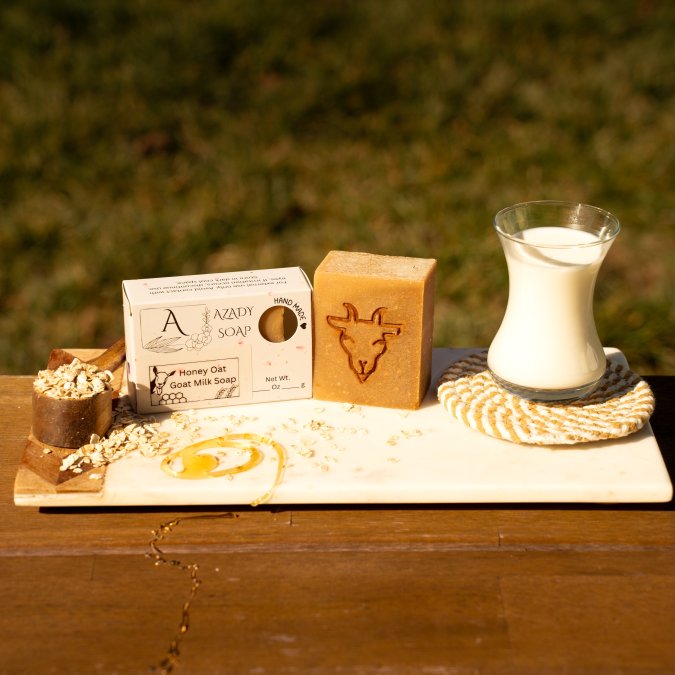
The Honey Oats Goat Milk Soap from Azady Soap combines shea and mango butters as foundational ingredients, creating that creamy slip and lasting moisture that dry skin craves.

Goat Milk and Honey
Goat milk is one of the most effective ingredients for dry and sensitive skin. It contains natural fats and proteins that closely match your skin's own composition, making it easily absorbed. Goat milk soap creates a gentle, milky cleanse that conditions rather than dries, your skin feels smooth and soft instead of tight.
Honey acts as a natural humectant, meaning it actively draws moisture from the air into your skin and holds it there (pubmed.ncbi.nlm.nih.gov). Local honey also contains trace minerals and enzymes that soothe irritation and support healing. When combined with goat milk, honey creates a soap that cleanses, hydrates, and calms in one step.
This combination addresses a core problem with dry skin: most soaps remove moisture.
Colloidal Oatmeal for Soothing
Colloidal oatmeal, finely ground oat particles suspended in soap, serves two purposes. It gently exfoliates without being harsh, removing dead skin that can trap moisture and make dryness worse. More importantly, it soothes irritation and calms inflammation, making it ideal for eczema-prone or reactive skin.
The Honey Oats Goat Milk Soap includes colloidal oatmeal specifically to address the soothing aspect while maintaining that creamy lather. You get gentle exfoliation paired with comfort.
Goat Milk Soap for Dry Skin: Why It Works
Many people with chronic dryness or conditions like eczema report that goat milk soap is one of the few products they can use without flare-ups. This isn't coincidence, goat milk's composition actively supports skin healing rather than triggering inflammation.
Natural Oils for Dry Skin: Cold-Pressed and Nourishing
When you choose soap made with cold-pressed oils, you're getting the full nutritional profile. Your skin absorbs those fatty acids and uses them to rebuild its protective lipid layer, the barrier that keeps moisture in and irritants out.
Coconut and Olive Oil for Moisture
Coconut oil is a staple in natural soap because it creates excellent lather while providing fatty acids that moisturize. Olive oil adds depth, it's rich in oleic acid and squalene, compounds that mimic your skin's own sebum.
Together, coconut and olive oil create a balanced cleanse. Coconut provides the cleansing action while olive oil ensures you don't lose too much natural moisture in the process. This combination is the foundation of many effective soaps for dry skin.
Avocado Oil and Castor Oil Benefits
Avocado oil is notably rich in vitamins A, D, and E, nutrients your skin needs for repair and protection. It's also high in fatty acids that penetrate deeply, making it especially valuable for severely dry or mature skin. Avocado oil soap feels nourishing without heaviness.
Castor oil brings a different benefit: it's high in ricinoleic acid, which supports skin's natural healing processes. Castor oil also increases lather quality, so you get better cleansing action paired with deeper moisturizing. The combination of avocado and castor oil addresses both the moisture deficit and the barrier damage that comes with chronic dryness.
Homemade Soap for Dry Skin: What to Know
Making soap at home for dry skin requires understanding saponification, the chemical reaction where oils and lye combine to create soap. This isn't complicated, but it matters because how you manage the process directly affects whether your finished soap will be drying or nourishing.
Cold-Process Saponification and Superfatting
Cold-process soap making keeps temperatures low, which preserves the vitamins and beneficial compounds in your oils. The saponification reaction happens slowly over several weeks as the bars cure, during which excess moisture evaporates and the bars harden.
Superfatting is the key technique for dry skin. You intentionally add more oil than the lye can fully convert to soap, leaving behind free fatty acids. A superfatted soap at 5-7% excess oil creates bars that cleanse while conditioning. Go higher and your soap becomes too soft; go lower and you lose the moisturizing benefit.
This is where commercial soap makers have an advantage: they can precisely control superfatting percentages and ensure consistency. Homemade batches vary more, which is fine for learning, but consistency matters when you're managing a skin condition.
Avoiding Common Mistakes
The most common mistake in making soap for dry skin is using too much coconut oil. While coconut oil creates excellent lather, it can be drying at high percentages. A balanced recipe uses coconut oil for lather but relies on olive, avocado, and castor oils for the moisturizing base.
Another mistake is rushing the cure. Soap needs 4-6 weeks to fully cure before use. Uncured soap is too alkaline and will irritate dry skin. The wait is essential, it's when the bars harden and the pH drops to a safe level.
Many people also skip testing their soap's pH. Even if your recipe should work, contamination or measuring errors can create soap that's too alkaline. Testing strips are inexpensive and take the guesswork out.
Ingredients to Avoid When You Have Dry Skin
Synthetic fragrances and dyes are common irritants for dry skin. While they make soap look and smell appealing, they can trigger inflammation and worsen dryness. Essential oils are a gentler alternative, though some people still react to them, patch testing matters.
Sulfates like sodium lauryl sulfate are harsh cleansing agents that strip your skin's natural oils aggressively. They're cheap, which is why they're in most commercial soaps, but they're the opposite of what dry skin needs. Avoid any soap listing "sulfates" or "SLS" on the ingredient label.
Triclosan and other antimicrobial additives aren't necessary for soap and can disrupt your skin's natural microbiome. Your skin has beneficial bacteria that help maintain its barrier, harsh antimicrobials remove those too.
pH Balance and Skin Barrier Health
This pH difference is subtle but significant. Soap that's too alkaline temporarily raises your skin's pH, disrupting the acid mantle that protects your barrier. For dry skin already struggling to maintain that barrier, alkaline soap makes the problem worse. Natural, properly cured soap minimizes this disruption.
How to Choose the Right Soap for Your Dry Skin
Start by identifying whether your dryness is mild, moderate, or severe. Mild dryness might respond well to any natural soap with good oils. Severe dryness or eczema-prone skin needs specific ingredients like goat milk and colloidal oatmeal that actively soothe and hydrate.
Check the ingredient list and look for cold-pressed oils, butters, and minimal additives. If you see more than 15-20 ingredients, the soap likely contains fillers or preservatives that aren't necessary. Simpler formulas tend to be gentler.
Consider your skin type beyond dryness. If you have combination skin with dry patches, you might need a soap that cleanses oily areas without over-drying others. If your entire face is dry, a richer formula works better. If you have eczema or psoriasis, look specifically for goat milk, oatmeal, and honey combinations that address inflammation.
Test before committing to a full bar. This matters because even natural ingredients can trigger individual reactions, patch testing on a small area first prevents wasting a whole bar if your skin reacts unexpectedly.
Ingredient |
Primary Benefit |
Best For |
|---|---|---|
Shea Butter |
Deep moisturizing, creamy lather |
All dry skin types |
Goat Milk |
Gentle cleanse, natural conditioning |
Eczema, sensitive skin |
Honey |
Humectant, soothing |
Irritated or reactive skin |
Colloidal Oatmeal |
Gentle exfoliation, soothing |
Itchy, inflamed skin |
Olive Oil |
Fatty acids, penetrating moisture |
Severely dry skin |
Avocado Oil |
Vitamin-rich, nourishing |
Mature or damaged skin |
Castor Oil |
Healing support, lather improvement |
Compromised barriers |
Coconut Oil |
Cleansing action, lather |
Balanced formulas |
The Honey Oats Goat Milk Soap from Azady Soap brings together many of these elements, goat milk for gentle cleansing, honey for hydration, colloidal oatmeal for soothing, and shea and mango butters for lasting moisture. It's formulated specifically for the dry skin challenges we've discussed throughout this guide.
Natural soap ingredients for dry skin work because they respect your skin's chemistry rather than fighting against it. They cleanse without stripping, moisturize without clogging, and soothe without irritating. Understanding which ingredients do what, and why, transforms soap from just a cleaning product into genuine skincare.
Frequently Asked Questions
What natural soap ingredients are best for dry skin?
Shea butter, goat milk, honey, and plant-based oils like coconut, olive, and avocado oil are the most effective natural soap ingredients for dry skin. These ingredients work as emollients and humectants, drawing moisture into the skin and preventing transepidermal water loss. Colloidal oatmeal adds soothing relief for irritation. The Honey Oats Goat Milk Soap combines these key ingredients to cleanse without stripping natural oils.
Is goat milk soap good for dry skin?
Yes. Goat milk soap is excellent for dry skin because goat milk contains natural fatty acids and proteins, making it gentler than conventional soap. It helps the skin retain moisture and feel conditioned rather than tight. Goat milk is also naturally soothing for irritated, flaky skin. Goat milk soap for dry skin works best when combined with nourishing butters and oils that reinforce the skin barrier.
What ingredients should I avoid in soap if I have dry skin?
Avoid harsh sulfates, synthetic fragrances in high concentrations, and products with alcohol or drying essential oils in excess. Skip anything labeled as 'antibacterial' unless medically necessary, as these often disrupt your skin's natural microbiome.
Can I make homemade soap for dry skin?
Yes, homemade soap for dry skin is possible using cold-process saponification and superfatting techniques. Cold-process preserves more natural glycerin than hot-process methods, and superfatting adds extra oils that don't fully saponify, leaving them in the final bar. Use a blend of coconut, olive, and avocado oils with shea or mango butter, and keep lye ratios precise to avoid a product that's too harsh. If you're new to soap making, start with tested recipes to ensure safety and skin compatibility.
